
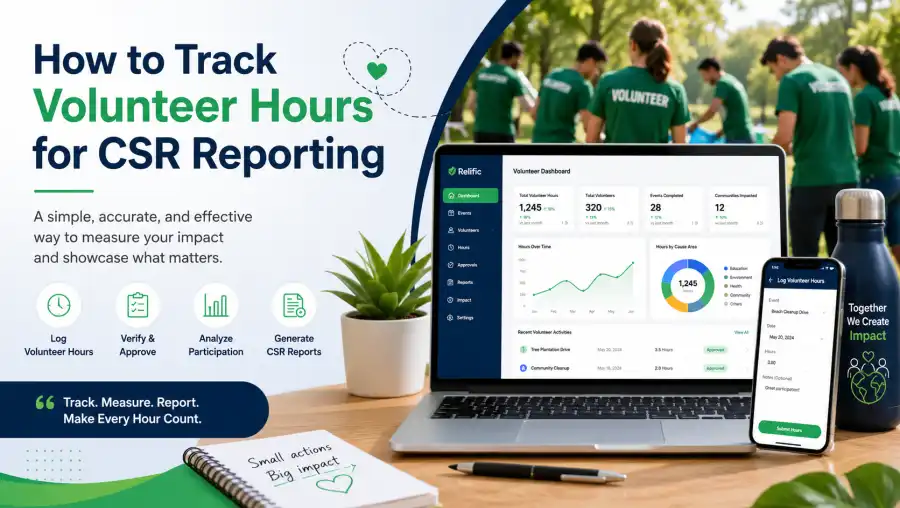
Accurate volunteer hour tracking is essential for organizations that want to demonstrate the true impact of their Corporate Social Responsibility (CSR) initiatives. While financial contributions are easy to measure, employee volunteer efforts often create long-term social value that should be documented and reported effectively. A structured volunteer tracking process helps companies improve transparency, meet reporting requirements, and showcase meaningful community engagement.
The first step is to establish a centralized system where employees can log their volunteer activities. Important details such as volunteer name, event, date, duration, location, beneficiary organization, and skills contributed should be recorded consistently. Digital volunteer management platforms simplify this process by allowing employees to submit hours through web or mobile applications while enabling managers to review and approve entries. Modern CSR platforms also automate hour tracking, event attendance, approvals, and report generation, reducing manual effort and improving data accuracy.
To ensure reliable CSR reporting, organizations should define clear volunteer policies, standardize reporting formats, and verify submitted hours before including them in annual CSR or ESG reports. Integrating volunteer data with broader CSR metrics—such as beneficiaries reached, projects completed, and social outcomes—provides a more comprehensive view of organizational impact.
Regular dashboards and analytics help CSR teams monitor participation trends, identify high-impact programs, and encourage greater employee engagement. Companies can also categorize volunteer hours by initiative, department, or Sustainable Development Goals (SDGs), making it easier to produce stakeholder-ready reports and demonstrate alignment with sustainability objectives.

- 10 Vues
-
Afficher le code QR

- Report Listing Cancel Report
-
- Current rating: 0
- Total votes: 0